
Table of Contents
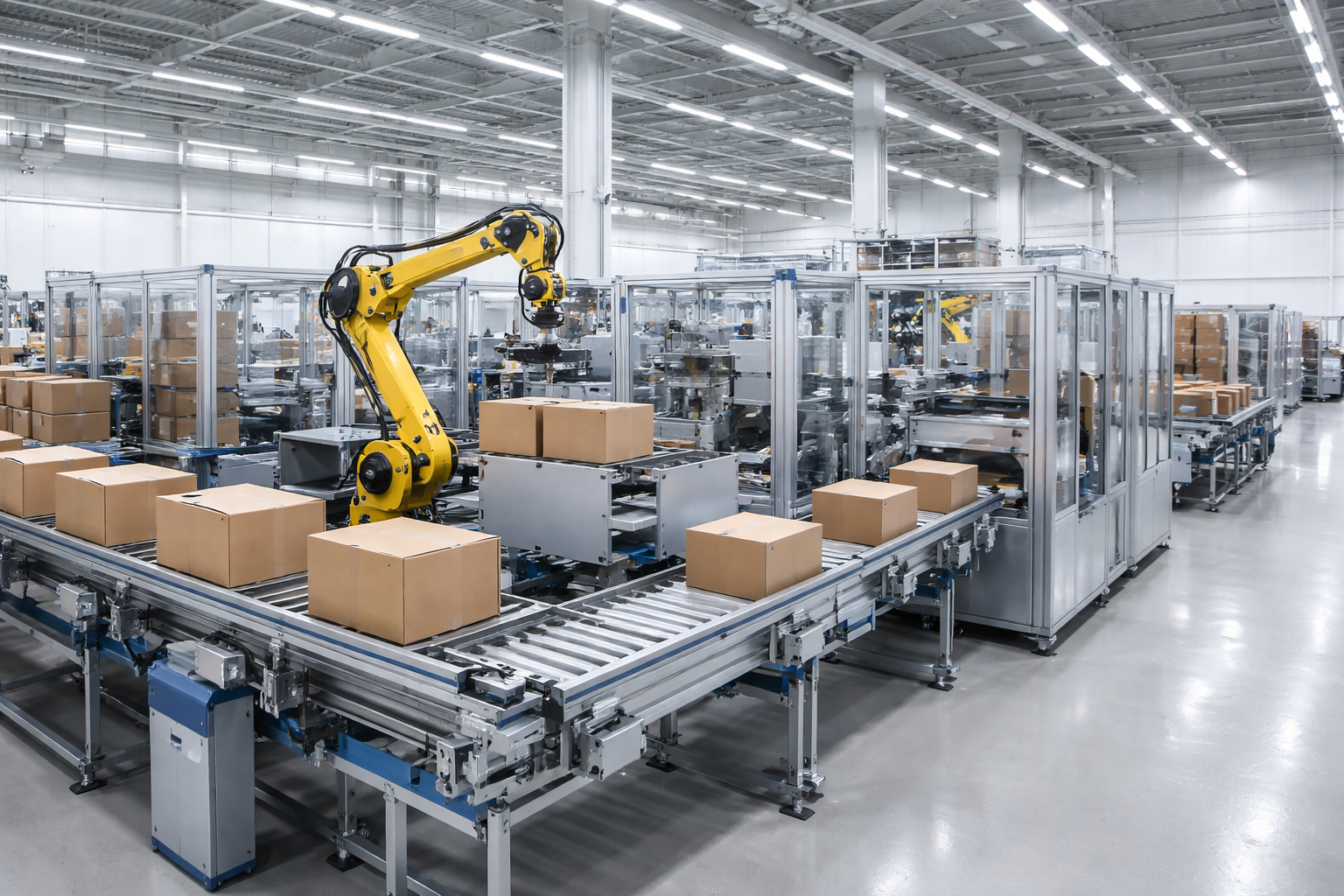
Manufacturing facilities depend on consistency. A production line may produce thousands of units each hour, but the value of that output depends on how reliably products are packaged, protected, and prepared for shipment. Packaging machinery handles this final stage of production, transforming loose goods into organized, labeled, and transport-ready units. In modern factories, packaging equipment is no longer treated as a secondary process. It has become a central part of production planning, influencing output speed, product quality, and logistics efficiency.
Companies that design and install these systems often work closely with specialized packaging machinery manufacturers to ensure equipment matches production capacity and product characteristics. When packaging systems are integrated properly into the production line, they reduce handling errors, maintain consistent packaging standards, and support smooth downstream distribution.
Packaging as a Critical Stage in Industrial Production
The packaging stage sits at the end of most manufacturing operations, but it plays a decisive role in determining how efficiently products move through the supply chain. Without reliable packaging systems, finished goods can accumulate at the end of the line, creating bottlenecks that slow overall production.
Packaging machinery prevents this disruption by synchronizing product output with packaging speed. Whether the product is food, pharmaceuticals, electronics, or household goods, packaging equipment ensures items move steadily from processing to storage or shipping.

Beyond simple containment, packaging also serves several operational purposes: protecting products during transport, maintaining hygiene standards, organizing units for inventory control, and providing identification through labeling.
Product Handling and Flow Management
One of the most fundamental functions of packaging machinery is managing product flow. Production lines rarely produce items in perfectly spaced intervals. Products may arrive from earlier processes in clusters or irregular sequences.
Packaging systems regulate this flow by separating, aligning, and positioning items before packaging occurs. Conveyor systems, orienting mechanisms, and product guides help create consistent spacing between units. This controlled flow allows downstream machines to operate with precision.
Flow management becomes especially important in high-output facilities where even minor disruptions can slow production significantly.
Filling and Dosing Operations
Many packaged products require precise quantities before sealing. Filling equipment handles this task with measured accuracy.
Different industries rely on different filling technologies. Liquids may be dispensed through gravity filling or pressure systems. Powders and granules are often use auger-based dosing equipment. Solid items can be counted or weighed automatically before packaging.
Accurate filling is essential not only for regulatory compliance but also for maintaining customer trust. Underfilled or overfilled packages create quality concerns and lead to unnecessary material waste.
Sealing and Package Formation
After filling, the packaging must be closed securely. Sealing equipment performs this task by applying heat, pressure, or mechanical closure, depending on the packaging material.
Common sealing methods include:
- Heat sealing for plastic films and flexible pouches
- Mechanical sealing for containers and cartons
- Induction sealing for tamper-resistant closures
- Adhesive sealing for cardboard packaging
A well-executed seal protects the product from contamination, moisture, and physical damage during transport and storage.
Labeling and Product Identification
Every packaged item must carry information. Labels provide product identification, regulatory data, expiration dates, and tracking codes. Modern packaging lines integrate labeling systems directly into the production process.
Labeling machines apply printed labels to bottles, cartons, or flexible packages while maintaining alignment and readability. In many facilities, these machines also incorporate printing modules capable of adding batch numbers or manufacturing dates in real time.
Clear labeling supports inventory tracking, quality control, and consumer information requirements.
Inspection and Quality Control
Packaging lines often include inspection systems designed to detect errors before products leave the facility. These systems verify that packaging meets required standards.
Inspection technologies may include:
- Vision systems that check label placement and print quality
- Weight verification equipment to confirm correct filling levels
- Seal inspection tools to detect packaging defects
Automated inspection reduces the risk of defective products reaching customers while minimizing manual quality checks.
Cartoning and Secondary Packaging
Individual product packages are often grouped together before shipment. Secondary packaging equipment organizes products into cartons, trays, or shrink-wrapped bundles.
Cartoning machines form boxes, insert products, and close cartons in a continuous sequence. For fragile goods or complex packaging configurations, robotic systems may assist with precise product placement.
Secondary packaging helps streamline storage and transportation by converting small units into manageable shipping quantities.
Palletizing and Logistics Preparation
At the final stage of the packaging line, products are prepared for distribution. Palletizing systems stack cartons or packages onto pallets according to predefined patterns.
Automated palletizers use mechanical arms or robotic systems to place items efficiently while maintaining stability. Once stacked, pallets are often wrapped with stretch film to secure loads during transport.
This stage connects production with warehouse operations, ensuring goods move smoothly into logistics channels.
Integration with Production Line Automation
Modern manufacturing relies heavily on automation. Packaging machinery must operate in coordination with upstream production equipment.
Integrated control systems allow packaging machines to communicate with conveyors, filling units, and inspection devices. Sensors monitor product movement and adjust machine speed when needed.
When integration is successful, the entire production line functions as a continuous process rather than a collection of independent machines.
Maintenance and Operational Reliability
Packaging machinery operates for long hours under demanding conditions. Reliability is essential to avoid costly production interruptions.
Routine maintenance helps maintain consistent performance. Common maintenance tasks include lubrication of moving components, inspection of sealing elements, calibration of filling systems, and cleaning of product contact surfaces.
Facilities that implement regular maintenance schedules often experience fewer unexpected stoppages and longer equipment lifespans.
Packaging Machinery and the Efficiency of Modern Production
Packaging equipment does far more than place products into containers. It organizes product flow, ensures consistent quantities, protects goods, and prepares shipments for distribution. Without these systems, even highly efficient production processes would struggle to deliver finished goods in usable form.
As manufacturing volumes grow and supply chains expand, the importance of reliable packaging machinery continues to increase. Well-designed packaging lines support smooth production flow, reduce manual handling, and maintain consistent packaging quality across large product volumes.
By combining accurate filling, secure sealing, product identification, inspection, and logistics preparation, packaging machinery serves as the final link between manufacturing output and the global distribution network.
Have any thoughts?
Share your reaction or leave a quick response — we’d love to hear what you think!
-
 0
0
-
 0
0
-
 0
0
-
 0
0
-
 0
0
-
 0
0